A corneal ulcer isn’t just a painful eye condition—it’s a medical emergency that can permanently scar your vision if you wait too long. The good news: caught early, treatment is often straightforward and affordable. The bad news: delayed care can mean surgery costing thousands.
Here’s what you’ll realistically pay.
What Is a Corneal Ulcer?
A corneal ulcer is an open sore on the clear front surface of your eye, usually caused by a bacterial, viral, fungal, or parasitic infection. Contact lens overwear is the most common trigger in the US—the AAO estimates that contact lens-related eye infections affect roughly 1 million Americans annually.
Symptoms come on fast: severe eye pain, redness, blurry vision, sensitivity to light, and a white or gray spot on the cornea. If that sounds like you right now, stop reading and call an ophthalmologist today.
Typical Treatment Costs
| Treatment Type | Cost Range |
|---|---|
| Initial ophthalmology exam (urgent) | $100–$300 |
| Prescription antibiotic/antifungal drops | $50–$400/month |
| Culture/lab testing (if needed) | $100–$350 |
| Corneal scraping (in-office procedure) | $200–$600 |
| Hospitalization (severe cases) | $2,000–$8,000+ |
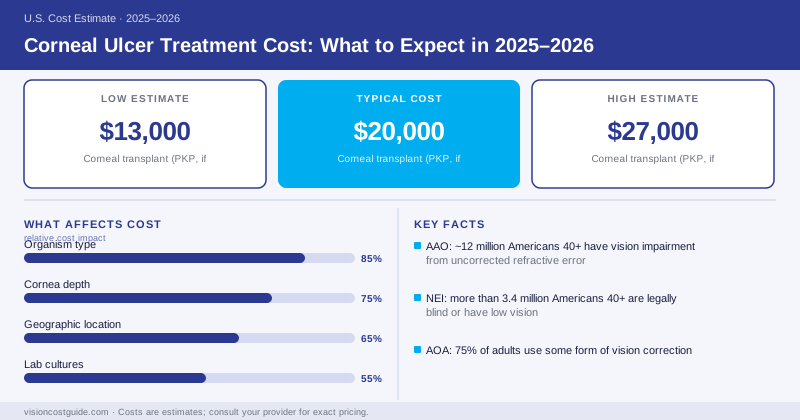
| Corneal transplant (PKP, if scarring occurs) | $13,000–$27,000 |
Most mild-to-moderate ulcers—those caught within 24–48 hours and not involving deep stromal tissue—are managed with prescription eye drops alone. Expect to pay $150–$700 total if you have no complications.
Severe ulcers, especially those caused by Acanthamoeba (often linked to swimming in contacts) or fungal infection (more common after eye injury with organic matter), may require weeks of intensive treatment and hospitalization.
Does Insurance Cover Corneal Ulcers?
Yes—corneal ulcers are a medical condition, not a routine vision issue. That means your medical health insurance (not your vision plan) pays for treatment. If you have a standard ACA-compliant plan, you’ll typically pay only your copay or deductible, which can be $0–$50 for urgent care or $150–$350 for a specialist visit.
Without any insurance, costs add up quickly. A single bottle of fortified antibiotic drops (often compounded for severe cases) can run $100–$200. Daily or twice-daily check-up visits during active infection can cost $100–$250 each.
The CDC reports that about 1 in 500 contact lens wearers develops a serious eye infection each year. Never sleep in daily-wear lenses, never rinse your case with tap water, and replace your case every 3 months. The average corneal ulcer treatment costs more than a lifetime supply of contact lens cases.
What Drives the Cost
Organism type is the biggest variable. Bacterial ulcers respond well to broad-spectrum fluoroquinolone drops (ciprofloxacin or moxifloxacin—$30–$80 generic). Fungal ulcers require natamycin or voriconazole, which are far more expensive and harder to obtain. Acanthamoeba ulcers require combination therapy for months.
Cornea depth matters enormously. Superficial ulcers confined to the epithelium heal in days. Stromal ulcers penetrating deeper layers scar. Scarring that impairs central vision may ultimately require a penetrating keratoplasty (PKP) or deep lamellar keratoplasty (DALK)—procedures costing $13,000–$27,000 per eye.
Geographic location affects specialist fees. Ophthalmologists in major metro areas charge 30–50% more than rural practices.
Lab cultures add $100–$350 but are often skipped for clear-cut bacterial presentations. Your doctor may order them if initial treatment isn’t working after 48–72 hours.
Managing the Cost
- Go to an ophthalmologist, not urgent care. Most urgent care clinics can’t properly slit-lamp examine a corneal ulcer or prescribe the right topical antibiotics. You’ll end up paying twice.
- Ask about generics. Ciprofloxacin ophthalmic 0.3% is available as a $15–$30 generic. It works well for most bacterial ulcers.
- Use your HSA/FSA. All treatment costs are qualified medical expenses.
- Follow the full course. Stopping drops early is the #1 cause of recurrence—and a second ulcer in the same spot is far harder and more expensive to treat.
When Costs Escalate
Watch for these signs that you’re heading toward higher costs: worsening pain after 48 hours of treatment, ulcer enlarging on follow-up, hypopyon (pus in the front chamber of the eye), or perforation risk. At that point, an urgent specialist referral or hospital admission isn’t optional.
A 2022 study published in Ophthalmology found that patients who delayed care by more than 48 hours were significantly more likely to require surgical intervention—driving average total treatment costs from under $400 to over $4,000.
The bottom line: corneal ulcers are almost always treatable at low cost if you act fast. Every hour you wait is a gamble with your vision—and your wallet.
Frequently Asked Questions
Basic corneal ulcer treatment with topical antibiotics and eye drops ranges from $150–$500 for an urgent care or ophthalmology visit, while hospitalization for severe cases can cost $1,500–$3,000. If a corneal transplant becomes necessary due to scarring, expect $10,000–$15,000 or more, though this is rare when treatment begins early.
Most health insurance plans cover corneal ulcer diagnosis and treatment as a medical emergency, including office visits, antibiotics, and hospitalization, though your out-of-pocket cost depends on your deductible and copay structure (typically $0–$500 for emergency visits). Corneal transplants are usually covered by insurance if medically necessary, but you may owe 10–20% coinsurance depending on your plan.
Corneal ulcers are a medical emergency requiring treatment within 24 hours to prevent permanent scarring and vision loss. Early treatment with antibiotic eye drops can resolve mild ulcers in 1–2 weeks and costs significantly less than delayed care, which may require hospitalization or surgery lasting several weeks.