Frames don’t correct your vision. The lenses do. Yet in most full-service optical shops, frames account for 40–60% of the total pair cost — sometimes more. A $500 pair of glasses might have $80 worth of lenses and $420 worth of frame. That gap exists because optical retail has historically bundled frame selection, professional fitting, and brand premium in a way that obscures where the money goes. Here’s how to see through it.
What Frames Actually Cost by Tier
| Frame Tier | Price Range | Examples | What You’re Getting |
|---|---|---|---|
| Ultra-budget online | $5–$20 | Zenni house frames, Firmoo | Basic acetate or metal, limited adjustability |
| Budget online | $20–$60 | EyeBuyDirect, Goggles4U | Better variety, some premium finishes |
| Mid-market online | $60–$150 | Warby Parker, Felix + Iris | Branded materials, tried-on or home try-on |
| Wholesale club | $80–$180 | Costco Optical, Sam’s Club | Quality frames, in-person selection |
| Chain optical house brand | $100–$250 | LensCrafters, Visionworks | Standard retail, included in many packages |
| Designer/licensed brand | $200–$500 | Ray-Ban, Oakley, Prada, Gucci | Brand premium, typically Italian or Japanese made |
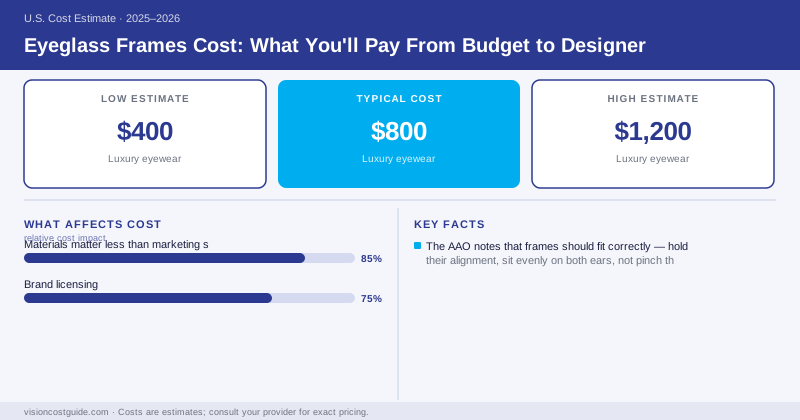
| Luxury eyewear | $400–$1,200+ | Lindberg, Cartier, Porsche Design | Premium materials, craftsmanship, status |
What Actually Drives Frame Pricing
Materials matter less than marketing suggests. A $50 acetate frame from a quality factory and a $350 “designer” acetate frame are sometimes made in the same Italian or Japanese factory with similar raw materials. The price difference reflects brand licensing fees, not material quality. That said:
- Titanium frames ($120–$400): Genuinely lighter and more durable than most plastics; hypoallergenic; worth the premium for sensitive skin or very lightweight requirements
- Memory metal (beta-titanium): Flexes under stress and returns to shape — reduces breakage from sitting on or bending; worthwhile for active wearers
- Standard acetate: The most common material; durable, available in infinite colors/patterns, easy to adjust; wide quality range
- Wire/metal: Cheaper to produce, usually lighter than acetate, variable durability
- Carbon fiber: Premium weight reduction, expensive, relatively rare
Brand licensing. Designer frames like Ray-Ban, Prada, and Gucci are typically manufactured by Luxottica (now EssilorLuxottica) or Safilo Group under license. The optical quality of the frame is similar to non-designer frames in the same construction tier; the price premium is 60–80% brand name, 20–40% materials and craftsmanship.
The AAO notes that frames should fit correctly — hold their alignment, sit evenly on both ears, not pinch the nose — and that a well-fitting $60 frame will serve you better than a poorly fitting $400 one.
Frame fit isn’t cosmetic — it directly affects optical performance, especially for progressives, bifocals, and high prescriptions.
A frame that sits too low means your progressive corridor lands in the wrong place. A frame with the wrong vertex distance affects the effective prescription power at your eye. A frame with significant pantoscopic tilt needs to be compensated in the lens design.
Good fit criteria:
- Pupils should be centered vertically in the frame (or slightly above center)
- Frame sits firmly without nose pinch or ear discomfort
- Frame width matches your face — no gaps at temples, no squeezing at cheeks
- Pupillary distance from frame center matches your PD
Getting fitted professionally costs nothing extra in-store. If you buy frames online, verify your PD carefully and accept that some adjustment may be needed.
Frame Materials: Quick Reference
| Material | Weight | Durability | Adjustability | Price Range | Best For |
|---|---|---|---|---|---|
| Acetate/zyl | Moderate | Good | Easy | $30–$400 | Most adults |
| Metal/alloy | Light | Moderate | Moderate | $30–$300 | Minimalist style |
| Titanium | Very light | Excellent | Moderate | $120–$400 | Active, sensitive skin |
| Memory metal | Very light | Excellent | Good | $100–$300 | Active, kids |
| TR-90/nylon | Very light | Good | Limited | $30–$150 | Sports, children |
| Carbon fiber | Very light | Excellent | Limited | $200–$600 | Premium minimalists |
Insurance Coverage for Frames
Most vision plans offer a frame allowance of $130–$200 per year or per benefit cycle (often 24 months). You choose any in-network frame; the plan covers up to your allowance, you pay the difference.
Important nuance: some chains markup frames to capture insurance allowances — a frame priced at $200 under insurance may be findable for $140 at a retailer that doesn’t play insurance markup games. Costco Optical, in particular, prices frames without insurance-motivated markups.
If your frame selection costs less than your allowance, the remainder typically doesn’t carry over or apply to lenses. Use the full allowance strategically.
The Multiple-Pair Strategy
Once you understand frame pricing, the case for multiple pairs strengthens considerably:
- Online backup pair: $10–$30 (same prescription as primary)
- Prescription sunglasses frame: $20–$100 online, $80–$300 in-store
- Task-specific frames (computer glasses): $20–$80 online
Having three pairs at $30–$40 each online often costs less than one “premium” in-store pair and serves your life better — different styles for different contexts, backups for when one pair is lost or broken.
Be cautious about frame quality at the very lowest price tier ($5–$15). Some ultra-budget frames have limited nose pad adjustability, poor hinge quality, or proportions that don’t work for most face shapes. Spending $25–$40 at a slightly higher budget tier typically eliminates these issues. The functional floor for reliable frames is around $20–$30 at quality online retailers like Zenni or EyeBuyDirect.
What You Should Actually Pay
For most adults without strong brand preferences:
- Primary everyday pair: $30–$150 for frames (online to Warby Parker range), or use insurance allowance in-store
- Backup pair: $10–$40 online
- Prescription sunglasses: $20–$80 frame cost online, have lenses made there too
For adults who prefer designer brands:
- Buying designer frames directly from the optical shop is the most expensive option
- Sites like FramesDirect, SmartBuyGlasses, or 39DollarGlasses carry authenticated designer frames at 30–50% off retail
The only frame worth paying full designer price for is one that fits perfectly, feels right, and you’ll wear without hesitation every day for two years.
Frequently Asked Questions
Eyeglass frames range from $10 to $1,000+, with most people spending $50–$200 per frame at standard optical retailers. Designer and premium brands can exceed $400–$1,000, while budget options from online retailers or discount chains start as low as $10–$30, though the total glasses cost includes lenses, which typically add $80–$300 depending on prescription complexity.
Most vision insurance plans cover 40–60% of frame costs, typically up to a $130–$200 allowance per pair, with coverage occurring once every 1–2 years. Your out-of-pocket cost for frames usually ranges from $50–$150 after insurance, though you pay the full amount upfront if you exceed your plan's frame allowance or choose designer frames above the covered limit.
Online frames cost 50–70% less ($10–$80) than in-store ($50–$300+) but require you to get your pupillary distance (PD) measured at an eye doctor, which takes 5–10 minutes during an exam. In-store purchases are fitted immediately and ready same-day, while online orders typically arrive in 7–14 business days, making online better for budget shoppers but in-store better if you need frames urgently or want professional fitting.