Most patients assume an eye injection is a one-time fix. It’s not — and the cost reality of anti-VEGF therapy is one of the most important things you can understand before starting treatment. Injections for wet macular degeneration, diabetic macular edema, or retinal vein occlusion typically happen every 4–12 weeks, indefinitely. At $200–$2,000 per dose depending on the drug, the annual tab can easily hit $10,000–$24,000 before insurance adjustments.
Here’s the actual pricing landscape.
Anti-VEGF Injection Price by Drug: 2026 Comparison
Four anti-VEGF drugs dominate the US market. Their clinical efficacy is broadly comparable for most conditions — but their prices are not. The choice of drug often comes down to your insurance formulary, your retinal specialist’s preference, and your financial situation.
| Drug | Wholesale Cost Per Dose | Typical Patient OOP (w/ insurance) | Common Use |
|---|---|---|---|
| Bevacizumab (Avastin, off-label) | $50–$200 | $0–$50 | Wet AMD, DME, RVO |
| Ranibizumab (Lucentis) | $1,800–$2,000 | $0–$300 | Wet AMD, DME, RVO, ROP |
| Aflibercept (Eylea) | $1,800–$2,100 | $0–$300 | Wet AMD, DME, RVO |
| Faricimab (Vabysmo) | $2,100–$2,400 | $0–$400 | Wet AMD, DME |
| Brolucizumab (Beovu) | $1,800–$2,000 | $0–$300 | Wet AMD |
Avastin is the financial outlier. It’s a cancer drug used off-label in ophthalmology at a fraction of the cost of the branded anti-VEGF agents. The NEI-funded CATT trial established that Avastin and Lucentis produce statistically equivalent visual outcomes for wet AMD. Many retinal specialists use Avastin as first-line treatment; others are required by practice or insurance policy to start with branded drugs. It’s worth asking.
The Real Annual Cost
A 2024 analysis published in Ophthalmology estimated the average US patient with wet AMD receives 7–9 injections per year. Run that math on different drugs:
- Avastin at 8 injections: ~$800–$1,600/year wholesale (patient pays very little)
- Eylea at 8 injections: ~$14,400–$16,800/year wholesale
- Faricimab at 6 injections (longer dosing intervals): ~$12,600–$14,400/year
Insurance covers the bulk of this for most Medicare and commercially insured patients, but the 20% coinsurance under Medicare Part B can still add up to $2,000–$4,000 per year on branded drugs.
Medicare Part B covers intravitreal injections at 80% after the Part B deductible because they’re administered in a physician’s office. That 20% coinsurance applies to the drug’s ASP (Average Sales Price) plus a 6% add-on. For Eylea at $2,100 per dose, your 20% share is ~$420/dose — potentially $3,000+ per year if you’re injecting every 6–8 weeks. A Medigap supplement policy often covers this 20%, making it worth calculating carefully.
What You’ll Also Pay For
The drug cost is just one line on your bill. Each injection visit includes:
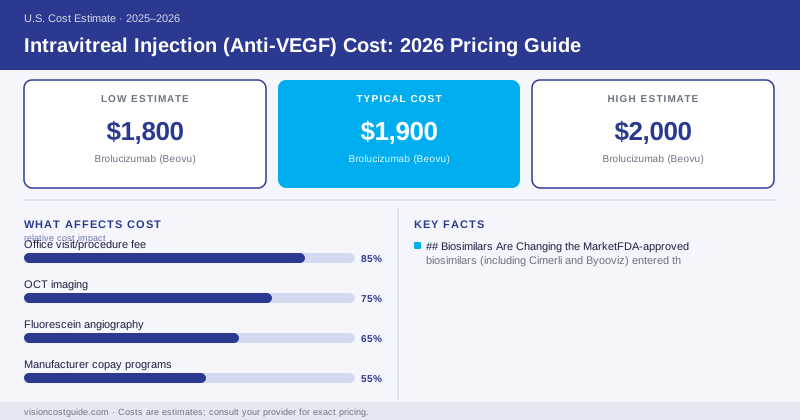
Office visit/procedure fee: $150–$400 depending on the practice and whether a separate exam is performed. This is billed with a procedure code for the injection plus an E&M code if examination is documented.
OCT imaging: Most retinal specialists perform optical coherence tomography at every injection visit to assess fluid and treatment response. Budget $150–$350 per scan without insurance, or a $25–$75 copay with it.
Fluorescein angiography (periodic): Less frequent — usually at diagnosis and when disease changes — but adds $400–$800 per session.
The AAO estimates that approximately 2 million Americans have wet AMD requiring treatment, making anti-VEGF one of the highest-volume injection procedures in medicine. That volume has driven some price competition and newer biosimilar entrants.
Biosimilars Are Changing the Market
FDA-approved ranibizumab biosimilars (including Cimerli and Byooviz) entered the US market in 2023 at 40–60% lower cost than branded Lucentis. Aflibercept (Eylea) biosimilars followed in 2024–2025. These compounds are clinically equivalent to their reference drugs by FDA definition.
If you’re currently on a branded agent and cost is a concern, ask your retinal specialist whether a biosimilar is appropriate for your condition. Some insurers now require biosimilar step therapy before covering branded biologics.
Never skip or delay injections to manage cost without talking to your doctor first. For conditions like wet AMD, a single skipped injection can result in irreversible vision loss — sometimes within weeks. If cost is a barrier, ask about manufacturer patient assistance programs, the National Eye Institute’s resource line, or whether Avastin is medically appropriate for your case.
Reducing Your Out-of-Pocket Costs
Manufacturer copay programs: Regeneron (Eylea) and Genentech (Lucentis, Vabysmo) both offer copay assistance for commercially insured patients. Eligible patients often pay $0 per injection.
State pharmaceutical assistance programs: Many states have SPAP programs that layer on top of Medicare to reduce the 20% coinsurance burden.
Compounding pharmacies: Avastin used in ophthalmology is typically prepared by a compounding pharmacy — your retinal practice handles this directly. You’re not sourcing the drug yourself.
Clinical trials: Patients enrolled in retinal trials at academic medical centers often receive anti-VEGF treatment at no cost. ClinicalTrials.gov lists active enrollment opportunities.
The bottom line: with good insurance and assistance programs, most patients pay very little per injection. Without coverage, the cost is substantial — but not unavoidable.
Anti-VEGF Injection Cost: With vs. Without Insurance
The gap between insured and uninsured costs for anti-VEGF therapy is one of the widest in all of ophthalmology.
| Drug | Uninsured Cost Per Dose | Medicare Part B OOP | Commercial Insurance OOP |
|---|---|---|---|
| Bevacizumab (Avastin, off-label) | $50–$200 | $10–$40 | $0–$50 |
| Ranibizumab (Lucentis) | $1,800–$2,000 | $360–$400 | $0–$300 (copay programs available) |
| Aflibercept (Eylea) | $1,800–$2,100 | $360–$420 | $0–$300 |
| Faricimab (Vabysmo) | $2,100–$2,400 | $420–$480 | $0–$400 |
| Ranibizumab biosimilar (Cimerli) | $750–$1,200 | $150–$240 | $0–$200 |
Key takeaway: If you’re uninsured or on Medicare without a Medigap supplement, Avastin is the financially dominant option — and the CATT trial confirmed equivalent visual outcomes vs. Lucentis for wet AMD. Ask your retinal specialist explicitly: “Is Avastin appropriate for my case?”
Frequently Asked Questions
What is the average cost of anti-VEGF injections per year? With 7–9 injections annually (the typical wet AMD schedule), annual costs range from $350–$1,800 for Avastin to $12,600–$21,600 for branded Eylea — before insurance. Most Medicare patients with Medigap pay $0–$500/year total. Commercially insured patients with manufacturer copay programs often pay $0 per Eylea or Vabysmo injection.
Does Medicare cover intravitreal anti-VEGF injections? Yes. Medicare Part B covers intravitreal injections at 80% of the drug’s Average Sales Price (ASP) plus a 6% add-on, because they’re administered in-office by a physician. You owe 20% — which can be $360–$480 per branded drug dose. A Medigap supplement eliminates or dramatically reduces that 20%.
Is Avastin really as good as Eylea or Lucentis? For wet AMD: the NEI-funded CATT trial showed no statistically significant difference in visual acuity outcomes between Avastin and Lucentis at 1 and 2 years. Eylea demonstrated a slight advantage in certain DME subtypes in the DRCR.net Protocol T trial. Your retinal specialist can tell you whether your condition is one where a branded agent has a meaningful clinical edge.
For related conditions that require retinal monitoring and treatment, see our guides on macular degeneration treatment cost, diabetic eye exam cost, and retinal vein occlusion treatment cost.
Frequently Asked Questions
A single anti-VEGF injection ranges from $50 to $2,400 per dose, depending on the medication: Avastin typically costs $50–$100, Lucentis ranges from $1,500–$2,000, and Eylea costs $1,800–$2,400. Most patients receive injections every 4–12 weeks, meaning annual costs can reach $2,600–$10,000+ out-of-pocket without insurance coverage.
Yes, Medicare Part B covers anti-VEGF injections for wet age-related macular degeneration, diabetic macular edema, and retinal vein occlusion, though you typically pay 20% coinsurance after meeting your deductible. With supplemental Medigap coverage, your out-of-pocket costs are often capped at $100–$300 per injection.
Anti-VEGF injections are administered every 4–12 weeks depending on your condition and drug response, and treatment is typically ongoing indefinitely rather than a one-time fix. You will need regular eye exams between injections to monitor your vision and determine if continued treatment is necessary, as some patients may eventually space out or discontinue injections if the disease stabilizes.