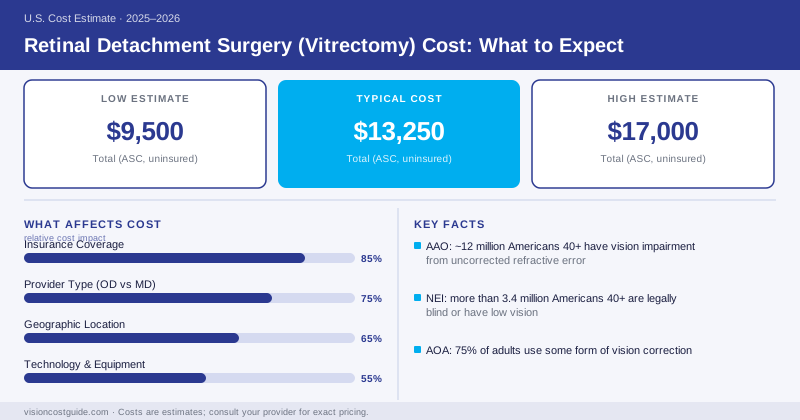
$15,000. That’s a typical out-of-pocket estimate for retinal detachment vitrectomy surgery if you’re uninsured. With coverage, your share drops dramatically — but even with good insurance, expect a few hundred to a few thousand dollars in cost-sharing. Knowing what drives that number helps you plan.
What Is a Vitrectomy?
A vitrectomy is the most common surgical approach for repairing a detached retina. Your surgeon removes the vitreous gel inside your eye, reattaches the retina, and fills the eye with a gas bubble or silicone oil to hold everything in place while healing. It’s done under local anesthesia, usually as an outpatient procedure.
The American Academy of Ophthalmology (AAO) estimates that about 1 in 300 Americans will experience a retinal detachment in their lifetime — and surgery is almost always required. Waiting isn’t an option. Every hour of delay when the macula is threatened increases the risk of permanent vision loss.
Detached Retina Surgery Cost: Vitrectomy Component Breakdown
Several components stack up:
- Surgeon fee — Retinal surgeons are subspecialists. Their fees reflect the complexity of the procedure.
- Anesthesia — Typically local with sedation, billed separately.
- Facility fee — Hospital outpatient vs. ambulatory surgery center (ASC) — ASCs are usually cheaper.
- Intraocular materials — Gas (SF6 or C3F8) or silicone oil added at surgery.
- Follow-up visits — You’ll need multiple post-op checks over 6–12 weeks.
| Cost Component | Uninsured Estimate | With Insurance (typical OOP) |
|---|---|---|
| Surgeon fee | $3,500–$6,000 | $300–$900 copay/coinsurance |
| Anesthesia | $1,000–$2,000 | $100–$400 |
| Facility fee (ASC) | $5,000–$9,000 | $500–$2,000 |
| Facility fee (hospital OR) | $8,000–$15,000 | $1,000–$4,000 |
| Post-op visits (6–8) | $150–$300 each | Copay per visit |
| Total (ASC, uninsured) | $9,500–$17,000 | $900–$3,300 |
Does Insurance Cover It?
Yes — vitrectomy for retinal detachment is medically necessary, so it’s covered under medical insurance (not vision insurance). If you have Medicare Part B, it covers 80% of the approved amount after your deductible. A 2023 CMS data analysis showed vitrectomy is one of the most commonly billed retinal procedures, with Medicare paying roughly $2,400–$3,800 to the surgeon alone.
Private insurers treat it the same way — medical benefit, not vision benefit. Your deductible, out-of-pocket maximum, and whether the surgeon is in-network all shape what you’ll actually pay.
Retinal surgeons are subspecialists, and not all are in every network. Call your insurer before surgery (if there’s any lead time) to confirm the surgeon and facility are in-network. Out-of-network retinal surgery can leave you with 30–50% of total charges.
When There’s No Time to Plan
Retinal detachment is often an emergency. You may not have time to shop surgeons or check networks. In that case:
- Go to the nearest retinal specialist immediately. Macula-on detachments repaired within hours have much better outcomes.
- Call your insurer from the waiting room (or have a family member do it) to start the emergency authorization process.
- Request itemized billing afterward — hospitals routinely have errors, and a patient advocate can often negotiate.
Don’t let cost delay treatment. Untreated retinal detachment causes permanent blindness. Most insurers cover emergency retinal surgery without prior authorization. Address billing after you’ve saved your vision.
Ways to Reduce Your Costs
Use an ASC if possible. Ambulatory surgery centers typically cost 40–60% less than hospital operating rooms for the same procedure. Ask your surgeon whether your case can be done at an ASC — most uncomplicated detachments can.
Ask about a payment plan. Most retinal practices offer interest-free financing for 6–12 months. CareCredit and Alphaeon Credit are commonly accepted.
Check your out-of-pocket maximum. If you’ve already met your annual OOP max due to other medical care that year, your insurer covers 100% of in-network charges. Timing elective follow-up procedures accordingly can save money.
Request a financial counselor. Large hospital systems have financial assistance programs — sometimes called charity care — for patients who qualify based on income.
Questions to Ask Your Surgeon
- Is this an ASC or hospital procedure? Can I request the ASC setting?
- Will you be doing the surgery yourself, or will a fellow assist?
- How many of these procedures do you perform per month?
- What’s your re-detachment rate? (National average is around 5–10% for primary repairs.)
- What follow-up schedule should I plan for?
Vitrectomy is high-stakes surgery. Your surgeon’s experience matters as much as the cost. That said, once you’ve confirmed you’re in good hands, it pays to understand the financial side so the bills don’t blindside you after recovery.
Vitrectomy for Retinal Detachment: With vs. Without Insurance
| Coverage Scenario | Estimated Out-of-Pocket |
|---|---|
| No insurance — ASC | $9,500–$17,000 |
| No insurance — hospital OR | $15,000–$28,000 |
| Medicare Part B with Medigap | $0–$500 |
| Medicare Part B without supplement | $2,000–$4,500 |
| Commercial insurance (in-network) | $1,000–$7,000 (OOP max) |
| Commercial — out-of-network surgeon | $5,000–$15,000+ (balance billing) |
The in-network check matters enormously here. Retinal surgeons are subspecialists, and many operate at multiple facilities. One of those facilities may be in-network while another isn’t — and you may not know until the EOB arrives. Call your insurer before surgery if there’s any lead time at all.
Frequently Asked Questions
What’s the difference between vitrectomy and scleral buckle for retinal detachment? Vitrectomy works from inside the eye — the surgeon removes the vitreous gel and reattaches the retina internally. Scleral buckle works from outside — a silicone band is sutured around the eye to indent the wall toward the detached retina. Vitrectomy costs more ($10,000–$25,000) but is preferred for complex cases. Scleral buckle ($8,000–$15,000) is often preferred for younger patients. See the retinal detachment surgery cost overview for a full comparison of all three surgical approaches.
Does silicone oil require a second surgery? Yes. When silicone oil is used as tamponade (typically in complex cases), a planned second surgery to remove it is needed 3–6 months later. Budget another $8,000–$15,000 (uninsured) or another round of cost-sharing for insured patients. This is why complex detachments can cost significantly more overall than simple ones.
For broader context on retinal surgery costs, see our epiretinal membrane surgery cost and vitrectomy surgery cost guides.
Frequently Asked Questions
Uninsured patients typically pay $9,500–$17,000 for retinal detachment vitrectomy, while Medicare-insured patients pay $2,000–$4,000 out-of-pocket after coverage. The total bill ranges from $9,500–$25,000 depending on complexity, surgeon experience, and facility type (ambulatory surgery center vs. hospital).
Most health insurance plans, including Medicare, cover vitrectomy as a medically necessary procedure for retinal detachment, reducing your out-of-pocket cost to copays, coinsurance, or deductibles. However, you'll still owe your plan's deductible first, and costs vary by plan; those with high-deductible plans may pay $2,000–$4,000 before coverage kicks in.
Vitrectomy is the most common surgical approach for repairing detached retinas and is often necessary when the detachment involves the macula or requires complex repair. Less severe cases may qualify for less invasive options like pneumatic retinopexy or scleral buckle, which typically cost less and have faster recovery times, so early diagnosis and consultation with a retinal specialist is critical.