Double vision sounds like a minor inconvenience until you’re living with it — driving becomes dangerous, reading is exhausting, and your depth perception is unreliable. Prism lenses exist to correct that, by bending light so both eyes receive it at the proper angle. They work. But they cost noticeably more than standard lenses, and most people aren’t warned about that before their appointment.
Here’s what to expect.
What Prism Lenses Actually Cost
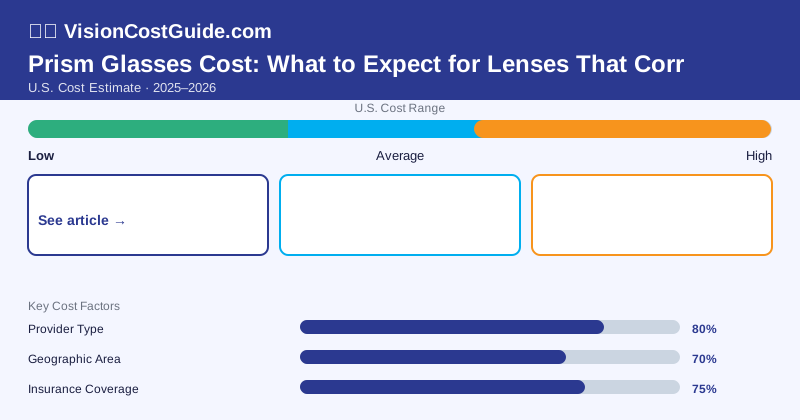
The cost of prism glasses depends on the strength of the prism (measured in prism diopters), the lens material, and whether your prescription is simple or complex. Add-ons like anti-reflective coating, photochromic tinting, or progressive design push the total higher.
| Lens Type | Typical Cost Range | Notes |
|---|---|---|
| Low prism (1–4 PD), single vision | $200–$400 | Most common entry point |
| Moderate prism (5–10 PD), single vision | $350–$600 | May require specialty lab |
| High prism (10+ PD) | $500–$900+ | Complex grinding, longer turnaround |
| Prism + progressive (bifocal) | $500–$1,000+ | Combines two complex designs |
| Temporary stick-on Fresnel prism | $20–$80 | Used while prescription stabilizes |
| Frames (mid-range) | $100–$300 | Thicker lenses may limit frame options |
That range is wide because prism isn’t just a coating — it’s physically ground into the lens, which takes more material, more lab time, and more precision than standard lenses. Frames also matter: thicker prism lenses work better in smaller, sturdier frames, and not every pair of glasses you’d pick off a shelf is compatible.
Why Prism Lenses Cost More
Standard prescription lenses correct sphere (nearsightedness/farsightedness) and cylinder (astigmatism). Prism adds a third dimension — a directional shift of light measured in base direction (up, down, in, out) plus prism diopters. That’s a significantly more complex fabrication order, and most wholesale optical labs can’t rush it. Turnaround time is often 7–14 days versus 2–3 days for basic lenses.
The AOA estimates that approximately 4% of adults experience clinically significant binocular vision disorders that may require prismatic correction. It’s not rare — but it’s specialized enough that not every optical retailer handles it routinely.
Before you commit to ground-in prism lenses, your optometrist or ophthalmologist may prescribe a Fresnel prism — a thin plastic film pressed onto your existing lenses. Fresnel prisms run $20–$80 and allow your doctor to test different prism powers while your eyes stabilize after a neurological event, strabismus surgery, or injury. They reduce visual clarity somewhat (especially at night), but they’re an economical way to determine your final prescription before spending $500+ on permanent lenses. If you’ve just been diagnosed with double vision, ask specifically whether a temporary Fresnel is appropriate before ordering custom lenses.
Insurance Coverage for Prism Glasses
Standard vision plans (VSP, EyeMed, Cigna Vision) typically cover frames and basic lenses on a set benefit schedule — for example, $150 toward frames and a standard lens allowance. Prism is treated as a medically necessary upgrade, and most plans do cover the prism add-on, though the specific dollar amount varies. You’ll often pay the difference between your benefit and the actual lab cost.
Medical insurance (not vision insurance) sometimes covers prism glasses when double vision results from a covered medical condition — stroke, thyroid eye disease, brain injury, or post-surgical diplopia. That claim goes through your medical plan, not your vision plan, and it’s worth filing separately if you have a documented neurological cause.
NEI data indicates that diplopia (double vision) can arise from conditions affecting cranial nerves III, IV, and VI — meaning it’s frequently a neurological or systemic symptom, not just an optical one. When that’s the case, medical necessity documentation from your neurologist or ophthalmologist strengthens your insurance claim considerably.
Don’t order prism glasses online. Prism requires exact placement in the lens based on your pupillary distance AND the specific direction of prism needed. Unlike a sphere/cylinder prescription, a prism error isn’t just “slightly blurry” — it can cause worsened double vision, headaches, and dizziness. Use a licensed optician at a physical lab for prism fabrication. Every time.
Getting the Prescription Right
Prism prescriptions can change — especially in the months following a neurological event. That’s normal, and it’s why many doctors under-prescribe prism initially (prescribing 50–75% of the measured amount) and adjust over time. If your doctor uses a phased approach, you may need two or three pairs over 12–18 months. Budget for that possibility.
For stable, long-term prism needs — strabismus, fourth nerve palsy, amblyopia aftermath — the prescription is typically more durable, and one pair of well-made lenses can last 2–3 years.
Bottom Line
Prism glasses run $200–$1,000+ depending on prescription complexity, and they can’t be safely outsourced to a discount online retailer. If your condition has a medical cause, file with both your vision and medical plans — you may get partial reimbursement from each. And if your prescription is still changing, start with a Fresnel prism rather than committing to expensive custom lenses before your vision stabilizes.