A pterygium is a fleshy growth that creeps across your cornea from the inner corner of your eye. Most people ignore it for years — it looks mildly irritating and feels about the same way. But when it starts affecting your vision or grows toward your pupil, surgery becomes the recommended option. The question most patients don’t ask until the day of their consultation: what does this actually cost?
The answer is more variable than you’d expect, and it hinges on one key surgical decision.
Pterygium Surgery Cost Breakdown
The biggest cost factor is whether your surgeon uses a conjunctival autograft — a small piece of healthy tissue from under your upper eyelid — to cover the area where the pterygium was removed. Graft procedures significantly reduce recurrence rates. They also cost more.
| Procedure Type | Cost Per Eye | Recurrence Risk |
|---|---|---|
| Simple excision (no graft) | $500–$1,200 | 30–80% recurrence within 1 year |
| Excision + conjunctival autograft | $1,200–$2,500 | 5–15% recurrence |
| Excision + amniotic membrane graft | $1,500–$3,500 | 5–10% recurrence |
| Mitomycin C (MMC) adjunct, no graft | $800–$1,800 | 15–30% recurrence |
| Post-op medications (drops) | $50–$200 | — |
The old “bare sclera” excision — just cut it off and leave the underlying tissue exposed — has recurrence rates as high as 80% in some series. Most ophthalmologists have moved away from it. If a surgeon offers you simple excision at a steep discount, ask about their recurrence rate and their graft approach before agreeing.
What Insurance Typically Covers
Pterygium surgery is medically necessary, not cosmetic. When the growth affects vision, causes persistent irritation, or has grown significantly onto the cornea, medical insurance (not vision insurance) covers it — including Medicare.
Typical coverage structure:
- Medical insurance: Covers the procedure under the surgical benefit; you pay your deductible and co-insurance (often 20% after deductible)
- Medicare Part B: Covers pterygium removal when medically indicated; standard 80/20 after the Part B deductible
- Vision insurance (VSP, EyeMed): Does not typically cover surgical procedures — that’s your medical plan’s territory
Pre-authorization is usually required. Get it before scheduling. Amniotic membrane grafts are covered by most major plans but may require additional documentation of medical necessity.
Pterygium surgery is almost always outpatient — typically performed in an ophthalmologist’s office surgery suite or an ambulatory surgery center. Facility fees matter a lot here. The same procedure can cost $800–$1,200 at a physician’s office surgery suite versus $1,500–$2,500 at a hospital outpatient facility — even with the same surgeon. If your surgeon has an in-office surgical suite, ask whether the procedure can be performed there. It’s often the lower-cost setting, even after insurance.
Recovery Costs and Timeline
Recovery from pterygium surgery involves prescription antibiotic drops and steroid drops, worn for 4–8 weeks. Budget $50–$200 for these, depending on what your surgeon prescribes and whether you have pharmacy coverage. You’ll also need several follow-up appointments — typically at 1 week, 1 month, and 3 months post-op.
The AOA notes that pterygium affects people who spend significant time outdoors, particularly in UV-intense environments. Surfers, construction workers, farmers, and people living at lower latitudes are at highest risk. NEI researchers have also identified UV exposure as the primary modifiable risk factor for both pterygium development and recurrence. Post-surgery sun protection — UV-blocking sunglasses — is genuinely protective, not just a formality.
Recovery timeline for graft procedures:
- Days 1–3: Significant discomfort, redness, light sensitivity — expected and normal
- Week 1–2: Improving comfort; wearing a protective shield at night
- Month 1–3: Healing continues; final visual clarity develops over 2–3 months
If you’ve had a pterygium removed before and it came back, ask your surgeon about amniotic membrane graft combined with adjunctive mitomycin C. Recurrent pterygia are more aggressive than primary ones and require a more aggressive approach. Don’t accept simple excision for a second removal — the recurrence-prevention strategy matters more the second time around.
Is It Worth Treating Early?
Small pterygia that aren’t affecting vision or causing significant symptoms can be monitored — eye drops and UV protection, no surgery. But pterygia don’t always grow slowly, and once they’ve encroached significantly on the central cornea, induced astigmatism can persist even after successful removal. Getting it removed while it’s still peripheral isn’t necessarily premature — it may actually preserve better outcomes.
Ask your ophthalmologist to document the pterygium’s current measurements and photograph it at each visit. That documentation also supports medical necessity for insurance purposes when you do decide to proceed.
Bottom Line
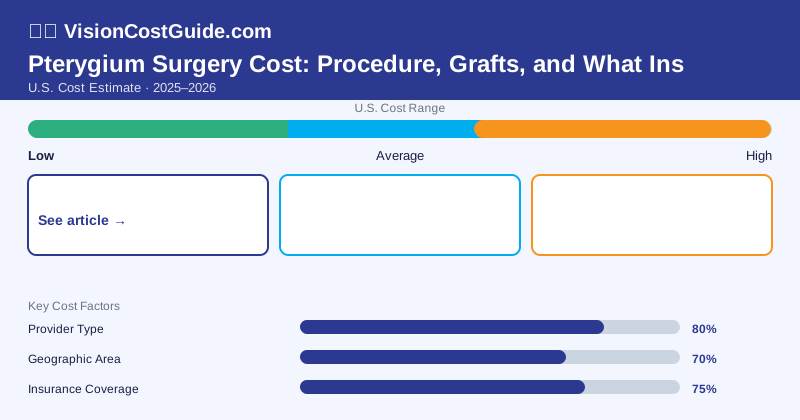
Pterygium surgery costs $1,000–$3,500 per eye, with graft procedures at the higher end providing significantly better recurrence outcomes. Medical insurance covers it when medically indicated — and it’s almost always worth getting the graft. The $500 you save on a simple excision evaporates quickly if you’re back in the surgeon’s chair 18 months later for a recurrence.