A single black speck drifting across your vision is annoying. A sudden shower of dozens of new floaters with flashing lights is an emergency. Knowing which situation you’re in determines whether you need a same-day retinal evaluation or just patience.
What Floaters Actually Are
The vitreous humor — the gel that fills the back two-thirds of your eye — is mostly water and collagen fibers. As you age, that gel gradually liquefies (a process called vitreous syneresis). The collagen fibers clump together, and those clumps cast shadows on your retina. That’s a floater.
For most people under 50, floaters are isolated and stable. After 50, posterior vitreous detachment (PVD) — where the vitreous completely separates from the retina — becomes very common. PVD usually causes a dramatic increase in floaters over days to weeks before stabilizing.
The American Academy of Ophthalmology notes that symptomatic PVD is one of the most common reasons adults seek urgent eye care, and the vast majority of cases resolve without treatment.
Same-day emergency rule: New floaters + flashing lights = possible retinal tear. A torn retina can progress to retinal detachment within hours. Don’t wait for a scheduled appointment — go to an emergency eye clinic or hospital ophthalmology department immediately. Retinal detachment repair is far more complex and expensive than a preventive laser procedure done on a fresh tear.
The Three Options (Including “Do Nothing”)
1. Watchful Waiting
This is the right call for most floaters. The brain is remarkably good at adapting to stable floaters — most people stop noticing them within 3–6 months as neural adaptation kicks in. Zero cost. Zero risk.
2. YAG Laser Vitreolysis
A retinal specialist uses a focused YAG laser to vaporize or fragment dense floater strands directly inside the vitreous. The procedure takes 15–30 minutes in an office setting, with no incision.
Who’s a candidate: People with large, well-defined, posteriorly located floater clumps — particularly Weiss rings (the ring-shaped floater that detaches from the optic disc during PVD). Diffuse cobweb-type floaters or those located near the lens capsule respond poorly.
Evidence: The MOVI randomized clinical trial (2017, JAMA Ophthalmology) — the highest-quality study on this procedure — found that 54% of laser-treated patients reported clinically meaningful symptom improvement vs. 9% of the sham group. That’s a real signal, but it also means about half of treated patients don’t see meaningful improvement.
| Treatment | Cost Per Eye | Insurance Coverage |
|---|---|---|
| YAG laser vitreolysis (1 session) | $1,000–$1,500 | Rarely covered |
| YAG laser vitreolysis (2 sessions) | $2,000–$3,000 | Rarely covered |
| Pars plana vitrectomy | $5,000–$10,000 | Covered if medically necessary |
| Watchful waiting | $0 | N/A |
3. Pars Plana Vitrectomy
This is a full surgical procedure — the retinal surgeon removes the vitreous gel entirely and replaces it with saline. It’s the most effective floater treatment (success rate over 90% for symptom resolution), but it comes with meaningful risks: cataract formation (nearly universal within 2–3 years in patients over 50), retinal tear, retinal detachment, and endophthalmitis (severe eye infection).
Because of those risks, vitrectomy for floaters is reserved for cases where floaters cause documented significant visual impairment — not just annoyance.
- Surgeon’s fee: $2,000–$4,000
- Ambulatory surgery center facility fee: $2,000–$5,000
- Anesthesia: $500–$1,500
- Total without insurance: $5,000–$10,000 per eye
With insurance and documented medical necessity, most of these costs are covered after your deductible and coinsurance. Pre-authorization is typically required.
What Determines Your Out-of-Pocket Cost
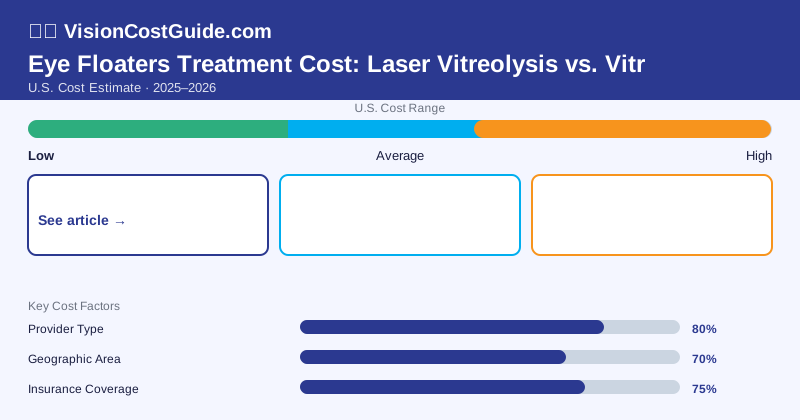
Insurance coverage is the single biggest variable. Laser vitreolysis is almost always considered elective. Vitrectomy can be covered when the treating retinal specialist documents that floaters are interfering with daily function — visual acuity testing, contrast sensitivity testing, and quality-of-life questionnaires all help build that case.
Location and practice type. Retinal specialist practices in major metros charge more than those in mid-sized cities. Laser vitreolysis is only available at practices with the specific YAG laser equipment — not every ophthalmology group offers it.
Number of sessions needed. Some dense floaters require a second laser session. Ask upfront whether the quoted price covers one or two sessions.
A standard eye exam with dilated fundus evaluation is the starting point for any floater workup — your optometrist will refer to a retinal specialist if there’s any concern about the vitreoretinal interface.
Bottom Line
Most floaters don’t need treatment and will become less noticeable on their own. If yours are significantly affecting your quality of life after 6 months of watchful waiting, a retinal specialist evaluation is worthwhile — laser vitreolysis runs $1,000–$1,500 per eye and works well for the right floater type. Vitrectomy is reserved for severe cases but is covered by insurance when properly documented. And if you get new floaters with flashes or a curtain across your vision: that’s a same-day emergency, not a cost question.
Frequently Asked Questions
YAG laser vitreolysis typically costs $1,000–$1,500 per eye out-of-pocket at a retinal specialist's office. Most practices charge per session, and some floaters require two sessions. Insurance rarely covers it.
Usually not. Both laser vitreolysis and vitrectomy for floaters are typically classified as elective by insurers unless there's documented significant visual impairment affecting daily function. Some retinal specialists can help document medical necessity for vitrectomy in severe cases.
Go to an emergency eye clinic the same day if you notice a sudden shower of new floaters, flashing lights (photopsia), or a shadow/curtain across part of your vision. These symptoms indicate a possible retinal tear or detachment — a true emergency. A few stable floaters that have been present for months don't require emergency care.